
Benner Was Right About Expertise. We Were Wrong About Time.
July 8, 2026
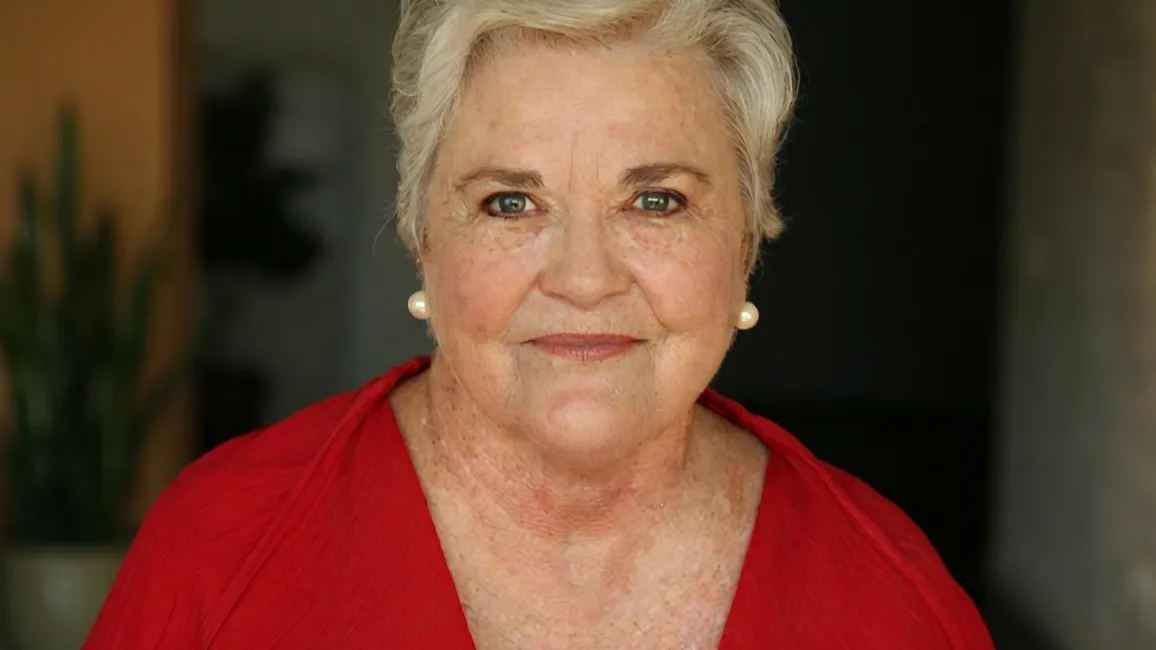
Patricia Benner has shaped how I think about nursing for my entire career. Her From Novice to Expert framework was the theoretical backbone of both my MSN and my DNP research on failure to rescue — and after 46 years in this profession, I still believe it is one of the most important ideas nursing has ever produced.
But I have come to believe we have been quietly misreading one part of it. And that misreading is costing us — and our patients — far more than we realize.
What Benner Actually Described
Benner’s model traces a nurse’s development across five stages: novice, advanced beginner, competent, proficient, and expert. The novice works from rules and context-free facts. The expert works from none of them — she reads a situation intuitively, recognizing patterns from thousands of accumulated encounters, often sensing something is wrong before she can name the cue.
That progression is real; I have watched it for decades. The problem is not the model. The problem is a single word we have attached to it: time.
The Assumption Hiding Inside “Experience”
Somewhere along the way, we translated Benner’s continuum into a timeline: competence takes about two years, expertise the better part of a career.
We say it so often it has hardened into fact — you just have to put in the years.
But here is the question worth sitting with:
What if the two years was never the requirement — only the delay?
Benner’s expert is not built by time. She is built by accumulated pattern recognition — enough clinical situations, processed deeply enough, that the patterns become automatic. Time is not the mechanism; it is a proxy for what actually matters: reps. Reasoning reps. Recognition reps. Enough encounters with deterioration that its signature becomes something the nurse feels before she calculates.
So the real question is not “why does competence take two years?” It is: why are we letting it develop by accident?
Why Bedside Experience Is Such a Slow Teacher
Think about how a new graduate actually accumulates those reps. She sees whatever happens to walk through the door — in no deliberate order, with no guarantee she will meet the patterns that matter most. The quiet compensation-phase sepsis, the subtle post-op hemorrhage, may not cross her path for months.
When those events do occur, they are rarely debriefed — she acts, the shift moves on, and the reasoning is never made visible. Yet reflection is what converts raw experience into transferable judgment. And she learns all of it under the worst conditions for learning: real stakes, real consequences, real fear — and fear teaches the brain to hide from uncertainty, not explore it.
Two years, in other words, is simply how long it takes for random, un-debriefed, fear-taxed exposure to accidentally accumulate enough reps to produce competence. We are not developing judgment. We are waiting for luck to develop it for us.
What Actually Accelerates the Continuum
And this is the heart of it. If time is only a proxy for deliberate reps, then we do not have to wait for them. We can deliver them on purpose.
The research on expertise makes this concrete. K. Anders Ericsson — whose work was later popularized, and oversimplified, as the “10,000-hour rule” — never argued that expertise was a function of hours. He argued it was a function of deliberate practice: focused, structured, feedback-rich repetition, aimed precisely at the edge of one’s current ability. Expertise was never really a time problem. We simply built an education and onboarding system that behaves as if it were.
Focused education compresses the continuum by delivering those reps deliberately, on five fronts:
● Give students the framework first. A structured map of how body systems fail gives them a schema to file every later experience into — and we learn far faster with an organized structure to hang cases on than by collecting them at random.
● Concentrate the reps. Twenty structured deterioration scenarios in a single course, rather than a handful stumbled into across two years.
● Debrief every one. Make the reasoning visible, every time — so each case produces transferable judgment, not just a memory.
● Remove the fear tax. Let students practice recognizing, escalating, and rescuing where a mistake teaches them instead of harming someone — so they finally explore uncertainty instead of concealing it.
● Target the lagging skill directly. Recognition and reasoning under ambiguity — instead of hoping it emerges as a byproduct of content coverage.
None of this skips the experience Benner requires. It delivers that experience deliberately, densely, and safely — instead of leaving it to chance. That is the whole idea.
The Honest Claim
Let me be precise, because this matters. I am not claiming we can manufacture Benner’s expert in a semester. The embodied, situational intuition of a twenty-year nurse is real, and it genuinely requires years of lived practice. Any educator who promises otherwise should not be trusted.
But that is not the claim. The claim is this:
We cannot compress twenty years of intuition into a classroom. But we can move a new graduate to competent, safe clinical judgment — reliably, and years faster — than random bedside accumulation does.
And that gap — between how fast we could produce a safe nurse and how slowly we currently do — is precisely where patients are being harmed. Failure to rescue does not wait two years for a nurse to become competent. It happens on week six.
This Is Why I Built What I Built
The Patient Safety Standard™ curriculum and the Clinical Judgment & Safety Method™ were built around exactly this principle: that the novice-to-competent journey does not have to be left to time and chance. Structured cases that build recognition. Debriefs that make the reasoning visible. A framework that gives students something to think with. Deliberate practice of the one skill that keeps patients alive — from the very first semester.
Benner gave us the map of where nurses need to go. What she did not give us — because it was never her job to — was a method for getting them there faster. That is the work I have spent the last several years on.
Because the two years was never the requirement. It was only the delay.
If this resonates with how you think about nursing education, I'd love for you to see what we've built at Lifebeat Solutions. The Patient Safety Standard™ curriculum and the Clinical Judgment & Safety Method™ Faculty Academy were designed specifically to give faculty the tools, the cases, and the questioning framework to teach clinical judgment the right way — from day one.
Visit lifebeatsolutions.com to learn more.
References
Benner, P. (1982). From Novice to Expert. American Journal of Nursing, 82(3), 402–407.
Ericsson, K. A., Krampe, R. T., & Tesch-Römer, C. (1993). The Role of Deliberate Practice in the Acquisition of Expert Performance. Psychological Review, 100(3), 363–406.
Kavanagh, J. M., & Sharpnack, P. A. (2021). Crisis in Competency: A Defining Moment in Nursing Education. OJIN: The Online Journal of Issues in Nursing, 26(1), Manuscript 2.
Dr. Julie Siemers, DNP, MSN, RN, is the founder of Lifebeat Solutions and creator of the Patient Safety Standard™ curriculum and the Clinical Judgment & Safety Method™. Her MSN and DNP research, grounded in Patricia Benner’s work, focused on failure-to-rescue prevention.
Learn more at lifebeatsolutions.com.
#NursingEducation #ClinicalJudgment #PatientSafety #NoviceToExpert #NurseEducators
FOLLOW US


