Free Monthly Community Call: An open hour for nurse educators. See how the frameworks work in a real course, hear what other programs are doing, and bring your questions. No pitch, no preparation.
November 17th → Save my seat
Build the Clinical Judgment Skills the NGN Actually Measures
The Patient Safety Standard™ + Clinical Judgment & Safety Method™ combines student curriculum and faculty development into one complete teaching system—helping nursing programs strengthen clinical judgment, improve NGN readiness, and prepare safer future nurses.
Develop the six NGN cognitive skills
Strengthen clinical judgment from Day One
Create consistency across faculty and simulation
Improve student readiness for practice
CLICK BELOW TO WATCH FIRST!
THE PROBLEM
Why Clinical Judgment Remains a Challenge in Nursing Education
Most nursing programs don't struggle because they lack content.
They struggle because clinical judgment is difficult to teach consistently.
Students often memorize information without learning how to think through complex patient situations. Faculty members may use different approaches to simulation, debriefing, and classroom discussion, creating variation in how clinical reasoning is developed.
As a result:
• Students struggle with prioritization and decision-making
• NGN performance remains inconsistent
• Simulation outcomes vary by instructor
• New graduates enter practice without fully developed clinical judgment skills
The solution requires more than additional content.
It requires a system.
Where is your program's
Clinical Judgment Gap?
Take our 90-second Clinical Judgment Readiness Assessment to discover where your students or faculty may be most at risk—and get a personalized recommended path for closing the gap.
THE SOLUTION
One Complete Teaching System.
Most nursing education companies provide curriculum. Most faculty development programs provide training.
The Patient Safety Standard™ and Clinical Judgment & Safety Method™ were intentionally designed to work together. Together, they create a repeatable system for developing clinical judgment across your entire program.
WHAT STUDENTS PRACTICE
The Patient Safety Standard™ (PSS™)
The curriculum system
• 36 patient safety modules
• 5 immersive case studies per module
• Real-world clinical error scenarios
• Full teaching assets and implementation materials
• Built to strengthen clinical judgment and decision-making
• Aligned with patient safety competencies and clinical judgment frameworks
Your students learn through realistic patient safety experiences that mirror the complexity of actual nursing practice.
HOW FACULTY TEACH
The Clinical Judgment & Safety Method™
The faculty development system
• A structured facilitation methodology for nurse educators
• Teaches faculty how to guide clinical reasoning discussions
• Helps educators assess judgment, not just memorization
• Builds confidence in simulation, debriefing, and case facilitation
• Provides practical questioning and engagement frameworks
• Designed to improve how students think under pressure
Your faculty learn how to deliberately teach the reasoning processes that prevent patient harm.
The Result
Stronger Clinical Judgment
Safer Clinical Decisions
Better NGN Readiness
More Confident Graduates
TESTIMONIAL
What Nursing Educators Are Saying
“Your case study is the best way I’ve seen to teach the lack of oxygenation alterations and lack of perfusion, and more importantly, how to assess and interpret early warning signs and treat.”
Kristine Wood, MS-Nsg. Ed., BSN, RN, CCRN
Nursing Instructor, Didactic & Clinical Education
What Nursing Students Are Saying
“"I spent the first half of my career in corporate learning and development and HR. I stumbled across your videos and a light went off in my brain.
It's absolutely been a disappointment to me the way the nursing instructors teach the content and then just expect students to magically know how to connect the dots. When test scores are low, they throw out questions and blame the students for not thinking critically.
Your video about early decompensation really spoke to me
I recently took one of the hardest exams I've taken to date and I did better than I anticipated — and it's because I took your concepts and started applying them.
It makes so much sense, and explains why so many of us are struggling."”
Cheryl Paxton Hughes
Second-career nursing student
NGN ALIGNMENT
Designed Around the Six Cognitive Skills Measured by the NGN
The Patient Safety Standard™ + Clinical Judgment & Safety Method™ directly develops the six cognitive skills assessed by the Next Generation NCLEX.
Students repeatedly practice these skills through patient safety scenarios, guided discussion, simulation, and structured reflection.
Recognize Cues
Identify relevant patient information.
Analyze Cues
Interpret findings and determine significance.
Prioritize Hypotheses
Decide what matters most.
Generate Solutions
Develop safe intervention plans.
Take Action
Implement clinical decisions.
Evaluate Outcomes
Assess effectiveness and next steps.
When students repeatedly practice these skills throughout the curriculum, they build the clinical judgment process required for both NGN success and safe patient care.
WHY IT WORKS
Threaded Safety. Embedded Judgment. Measurable Impact.
Unlike traditional curriculum that introduces patient safety as a single topic, the Patient Safety Standard™ embeds safety thinking throughout the entire learning experience.
Every case study, discussion, and clinical scenario is designed to help students:
Recognize early signs of deterioration
Identify preventable risks
Communicate concerns effectively
Prioritize patient needs
Make safer clinical decisions
This creates a continuous process of clinical judgment development rather than isolated learning events.
SOCIAL PROOF
What People Are Saying
Expert Care & Lasting Trust Because Peace of Mind is Priceless
OUR PARTNERS
Who We Work With
Working with organizations that share a commitment to practice-ready nurses and patient safety.


Ready to See How PSS™
Fits Your Program?
Schedule a brief consultation to explore how the Patient Safety Standard™ and Clinical Judgment & Safety Method™ can strengthen clinical judgment, improve NGN readiness, and support faculty development across your nursing program.
WHAT'S INCLUDED
Everything You Need to Build Clinical Judgment Across Your Program
Student Curriculum
• 36 Patient Safety Modules
• 180 Case Studies
• Teaching Guides
Faculty Development
• Clinical Judgment & Safety Method™
• Faculty Training Academy
• Facilitation Frameworks
• Simulation Debriefing Support
• Clinical Reasoning Strategies
• Implementation Resources
Institutional Support
• Curriculum Integration Guidance
• Faculty Onboarding Resources
• NGN Alignment Support
• Accreditation Readiness Resources
The Patient Safety Standard™
Equipping nurses to prevent harm, protect trust, and lead safe care
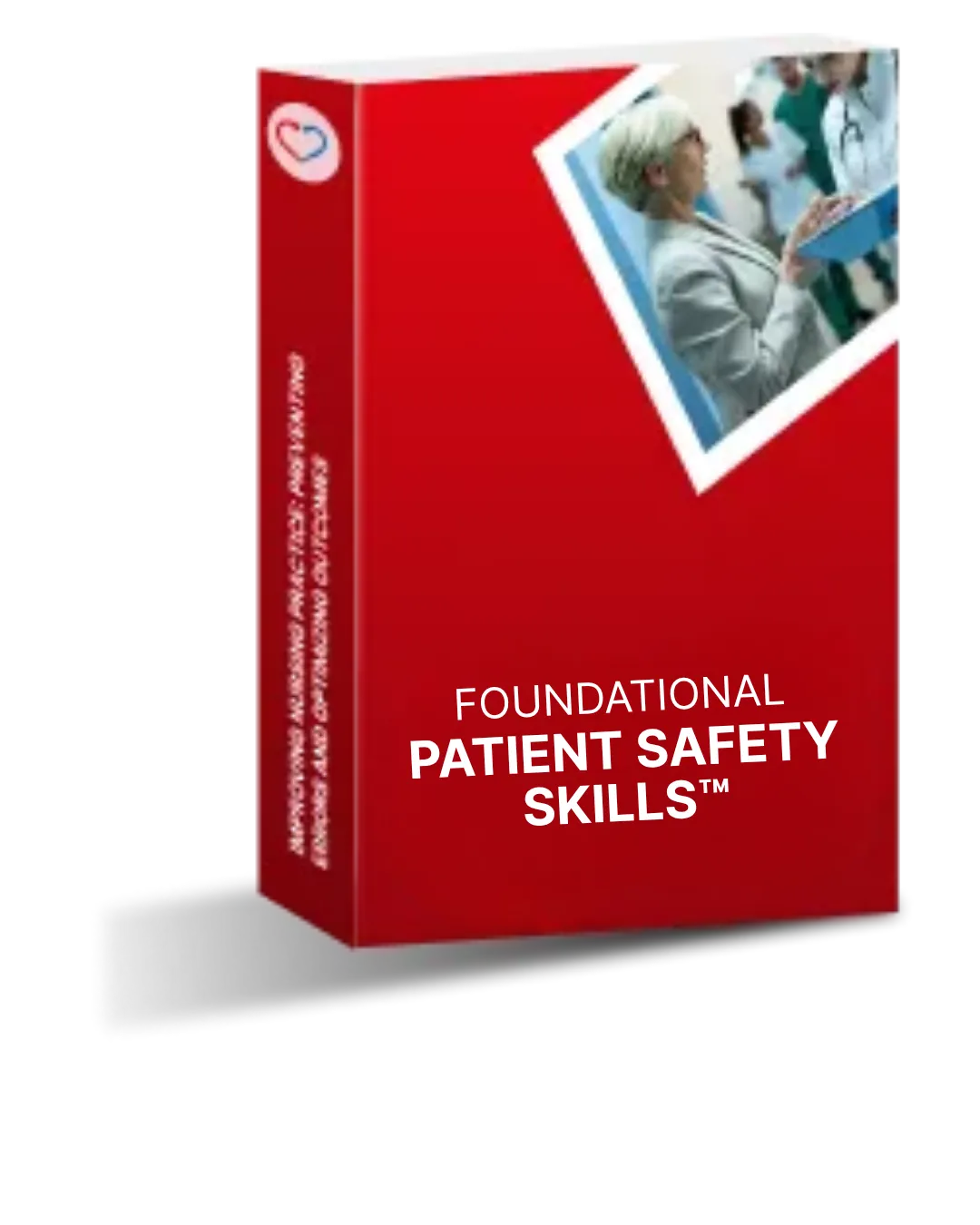
Level 1: Foundational Patient Safety Skills™
Level 1 lays the groundwork every nurse needs to prevent harm in real-world practice. From recognizing early warning signs to understanding the root causes of common medical errors, these courses help new and early-career nurses strengthen their clinical judgment and confidence at the bedside.
Courses
Module 1: Recognizing & Responding to Deteriorating Patients
Module 2: The Nurse’s Role in Failure to Rescue
Module 3: Clinical Judgment and Risk Recognition
Module 4: Nursing Primary Assessment Essentials
Module 5: Mastering Vital Signs
Module 6: Neurological Assessment for Practicing Nurses
Module 7: Pain Assessment: The Fifth Vital Sign
Module 8: Understanding Critical Laboratory Values
Module 9: Fluid Balance & Nutrition for Nurses
Module 10: Monitoring Perfusion in Nursing Practice
Module 11: Communication in Nursing Practice
Module 12: Patient & Family Engagement & Shared Decision-Making
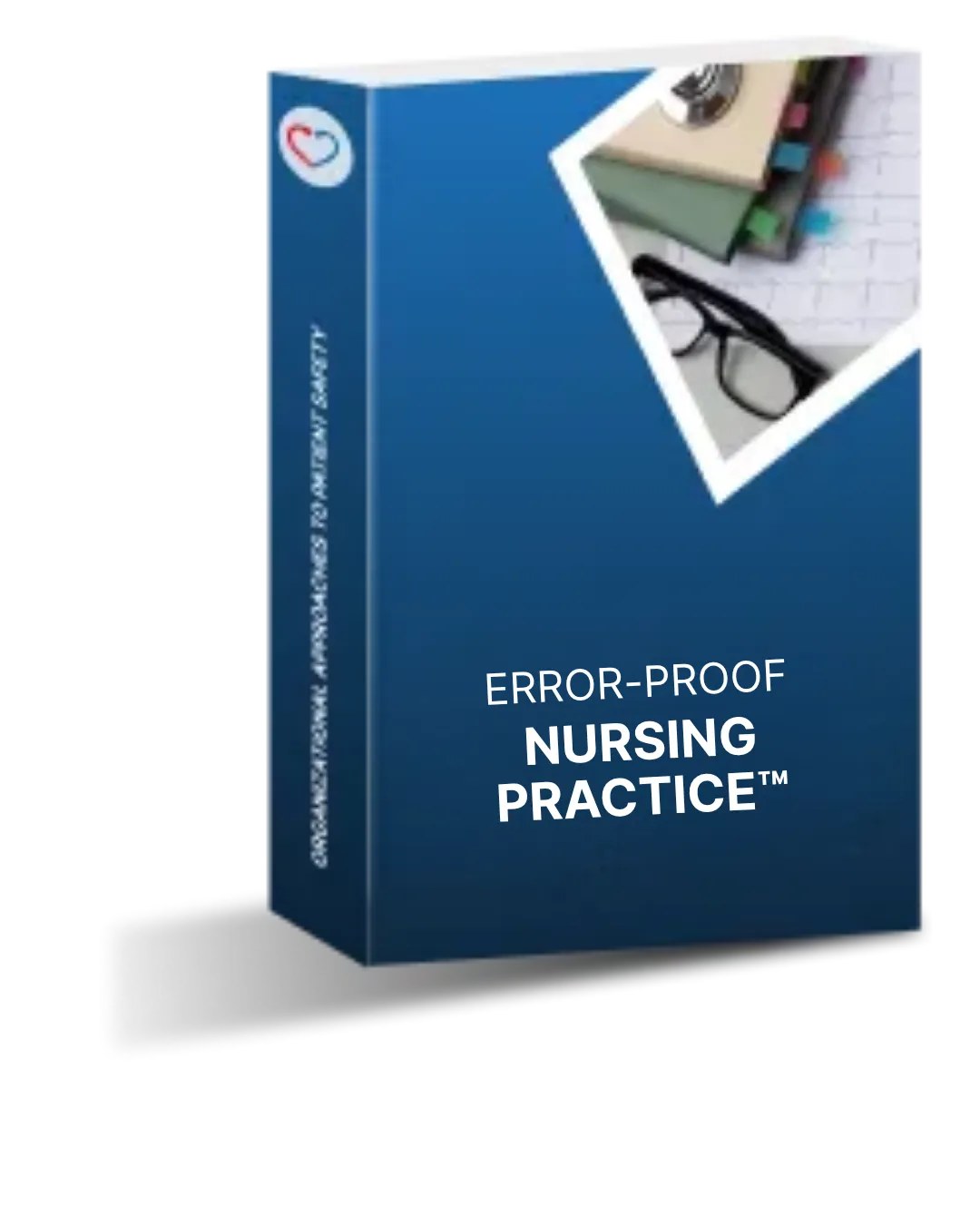
Level 2: Error-Proof Nursing Practice™
Level 2 shifts the nurse’s focus from reactive problem-solving to proactive safety architecture. It helps nurses recognize hidden vulnerabilities in systems, understand why errors recur, and adopt practices that make harm far less likely in everyday care.
Courses
Module 13: Medication Error Management
Module 14: Documentation Errors & Patient Data Communication
Module 15: Nursing Surveillance, Attentiveness & Vigilance
Module 16: Mastering Clinical Reasoning & Clinical Judgment
Module 17: Preoperative Surgical Care
Module 18: Nursing Role in Harm Prevention
Module 19: Sepsis & Healthcare-Associated Infections
Module 20: Interventions for Enhanced Patient Safety
Module 21: Interpretation of Authorized Orders
Module 22: Professional Responsibility & Patient Advocacy
Module 23: Mandated Reporting in Nursing
Module 24: Health Literacy & Patient Education
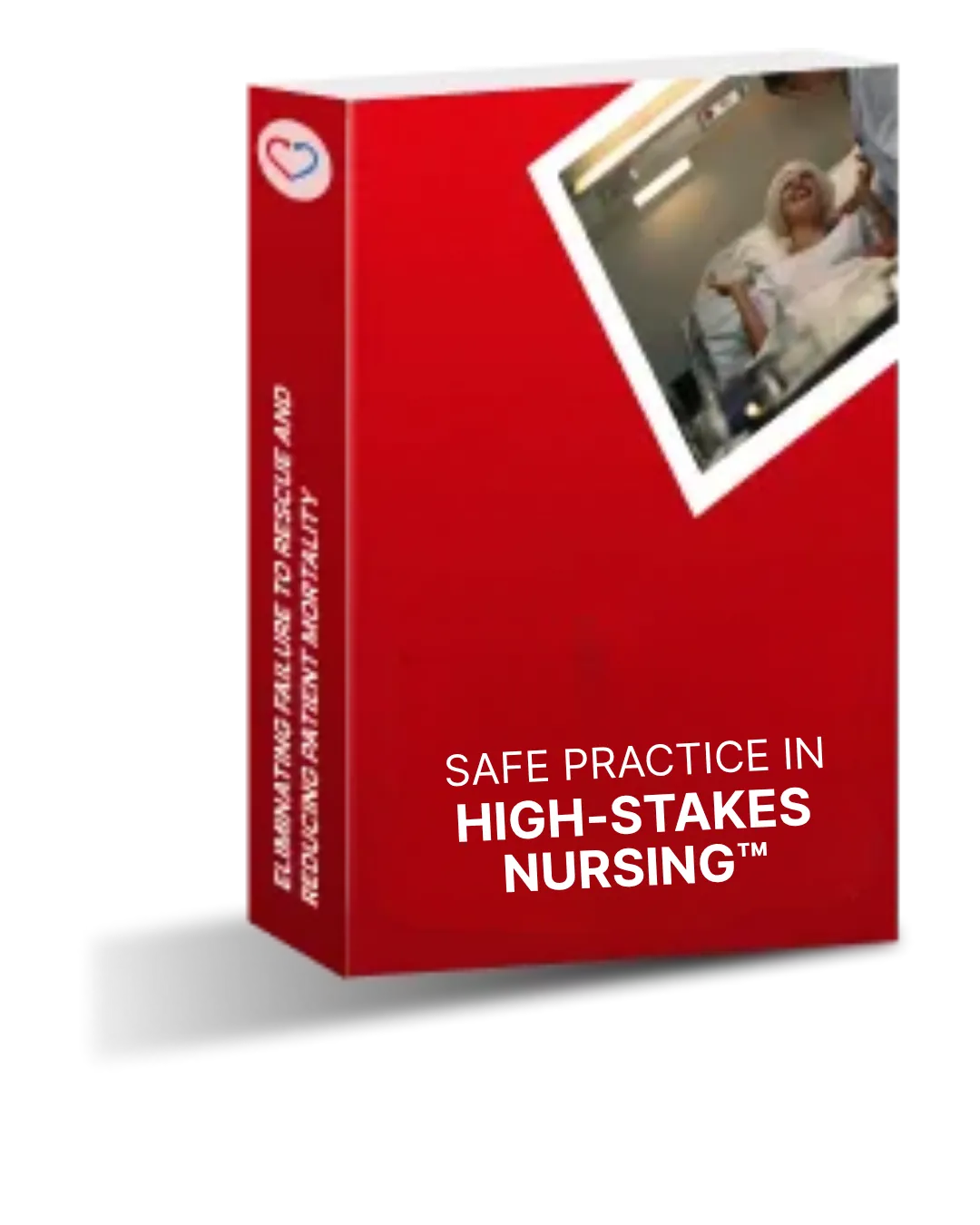
Level 3: Safe Practice in High-Stakes Nursing™
Level 3 equips nurses to take action in moments where clinical, legal, and ethical stakes are at their peak. From preventing catastrophic errors to managing acute crises and defending decisions in hindsight, these modules prepare nurses for the realities of modern care.
Courses
Module 25: Failure to Follow Nursing Standards of Care
Module 26: Failure to Assess and Monitor a Patient
Module 27: Failure to Act as Patient Advocate
Module 28: Failure to Use Equipment in a Responsible Manner
Module 29: Medication Reconciliation & Discharge Planning
Module 30: Postoperative Complications: Prevention & Management
Module 31: Nurse’s Role in Blood Transfusion Safety
Module 32: Sentinel & Never Events
Module 33: Psychological Safety for Teams
Module 34: Error Reporting & Systems Improvement
Module 35: Managing Patient Aggression in Acute Care Settings
Module 36: Addressing Patient Suicide Risk in Acute Care
Clinical Judgement Safety Method - Faculty Academy
The curriculum performs at its full potential only when faculty teach it well.
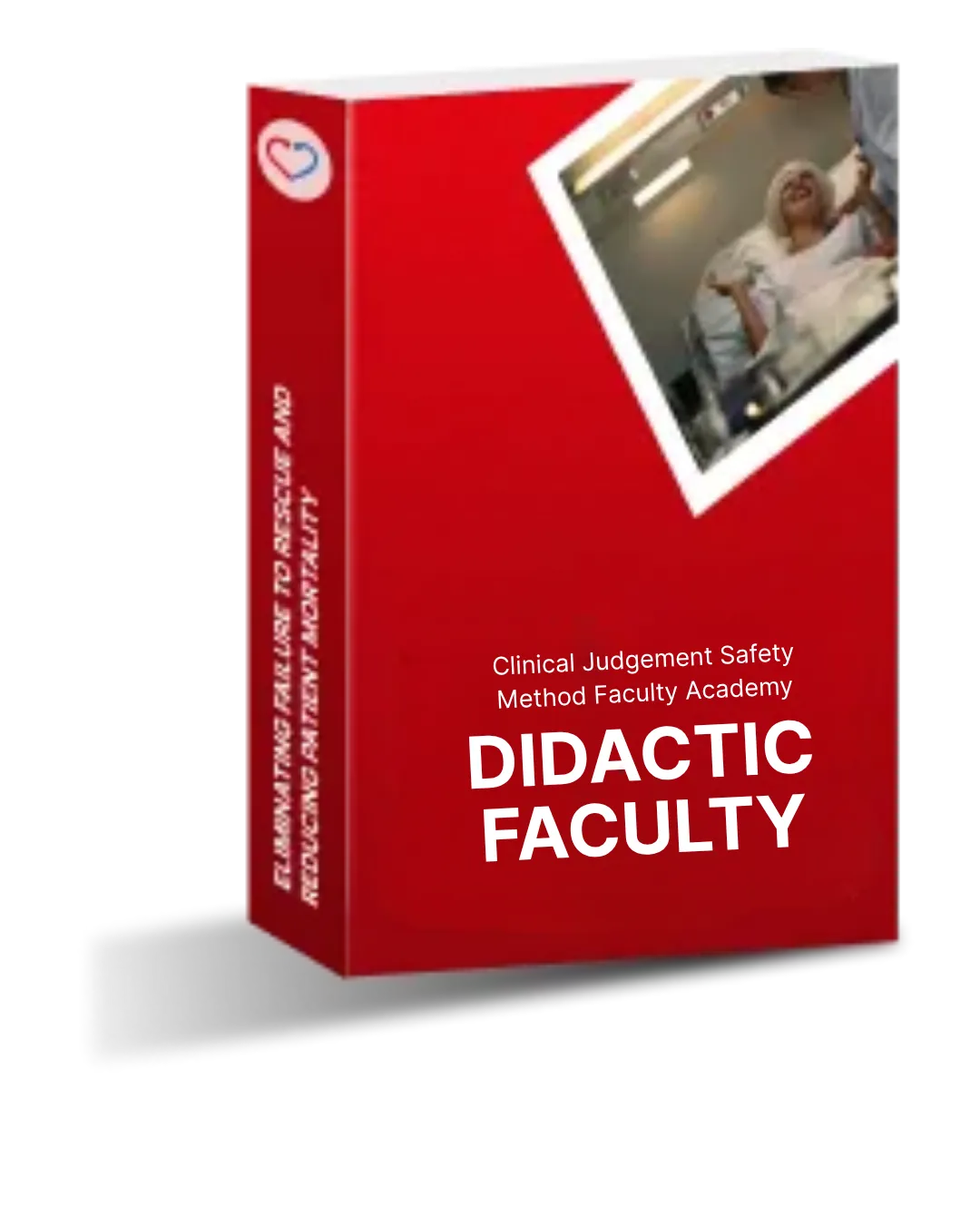
Didactic Faculty
Clinical Judgement Safety Method Faculty Academy
Classroom, lab, and simulation faculty — building a deliberate, evidence-based approach to teaching clinical judgment
Modules
7 Modules
7 CEU Hours
60 min / module
Self-paced, 12-month access
Module List:
• 1 — The Case for Change — why clinical judgment development requires a pedagogy shift
• 2 — Concept-Based Teaching — oxygenation, perfusion, and pattern recognition
• 3 — Socratic Questioning as a Cognitive Training Tool — the neuroscience of retrieval practice
• 4 — Early Recognition Frameworks and Failure-to-Rescue Prevention
• 5 — Case-Based Teaching — structure, facilitation, and the art of the debrief
• 6 — Simulation Debrief Mastery — moving from performance review to reasoning development
• 7 — Psychological Safety as a Patient Safety Strategy
Credential:
Certificate of Completion + 7 CEU contact hours upon completing all seven modules. Issued by Lifebeat Solutions.
Clinical Faculty
Clinical Instructor Academy
Academic clinical faculty assigned to hospital and community sites — closing the clinical-didactic gap at the bedside
Modules
4 Modules
4 CEU Hours
Site License / Campus
Unlimited clinical instructors per campus
Module List:
• 1 — The Clinical Instructor as Judgment Coach — the transfer gap and the Three-Question Protocol™
• 2 — The Bedside as a Case Study — the three-phase bedside encounter and the hallway debrief
• 3 — Questioning at the Bedside — the one-question discipline and responding to silence
• 4 — Bridging Clinical Back to the Classroom — weekly communication protocol and post-conference structure
Credential :
Certificate of Completion + 4 CEU contact hours upon completing all four modules. Site license covers all clinical instructors at a campus — no per-person pricing.
Schedule a call to see how we can help you!
FOLLOW US


